The majority of us are at home practicing social distancing, while others are still going to work to the essential jobs that support us during this global pandemic. Regardless of which end of the spectrum you are on, taking good care of yourself seems more vital now than ever. Most of the time our immune systems do a good job of fighting off illnesses, however sometimes it isn’t able to for various reasons, and we get sick. There are many factors that can determine immune health. Genetics, lifestyle, exercise, sleep, diet, mental health, etc. are all said to play a role in overall health and immunity. Looking at our body and mind as an overall whole can contribute to an immune system that elicits a healthy and strong response to attacks. Yoga and Holistic practices offer beneficial tips as well.
Nutrition
Good nutrition may perhaps be one of the most important factors in maintaining body health, as well as mental health. Our body needs proper macro and micronutrients, antioxidants, protein, carbohydrates, fats, minerals, vitamins, fat, and water to function, stay healthy, and provide defense for disease and environmental factors. Rather than letting this be a source of stress or overwhelm, it can be helpful to have guidelines, and simply start to notice the foods you are purchasing more closely. Organic meats processed without hormones or antibiotics if you are not vegan, minimally processed foods, lots of fruits and vegetables, olive oil, switching from processed sugar to dates, honey, maple syrup or coconut sugar, micronutrient rich herbal foods such as spirulina, turmeric, and wheat grass, and lots of water are a few suggestions. All of which are beneficial aides in maintaining body health, but also mental health.
More research has been done the past decade regarding the connection between a healthy gut, or GI System, and healthy mind. In fact, studies have been done that link chronic anxiety to an unhealthy gut or imbalanced gut bacteria. Yogis have told us for thousands of years that every part of us is connected. It’s in the word itself, “yoga” means to yoke, or to bring together. Modern day science is confirming what the ancient yogis have known all along, that our body and its systems are interconnected.
In order to maintain a healthy gut, probiotics and fiber-rich foods can bring balance. Examples are yogurt, kefir, kombucha, sauerkraut, bone broth, and kimchi. If you are vegan you can usually find options in these categories. Just be mindful of sneaky extra ingredients such as processed sugars or preservatives.
Holistic Allies
In addition to healthy food nutrition, herbal remedies have the potential to assist in relieving certain ailments, boost immunity, and have a myriad of medicinal properties. For example, Lemon Balm has the potential to calm the nervous system, relieve occasional indigestion, and promote a sense of calm that relieves anxiety. Garlic and echinacea root are known as immune stimulants. A potent oil, oil of oregano, has been shown to have antiviral, antimicrobial, and antifungal properties, in addition to other powerful properties. Also, mushroom powders such as reishi, astragalus, and turkey tail are thought to help regulate the immune system. Another ancient medicinal herb is ashwagandha, it is known as an adaptogenic herb that can help relieve stress or provide energy, depending on what your body needs. If you feel the early onset of something coming on, try making a tonic such as hot water, fresh lemon, fresh ginger, and 1-2 tablespoon(s) of apple cider vinegar with honey and 2-4 drops of oil of oregano. Be mindful as oil of oregano is very strong and can burn or cause upset stomach. Remember to speak to your health professional before ingesting herbs as they are often not regulated.
Therapeutic grade essential oils are said to have a myriad of healing properties as well. Lavender, lemon, eucalyptus, rosemary, and tea tree are potent oils and can aide in overall health and immunity. Be aware that not all essential oil brands are created equal. Some are meant only for diffusing, and some can be used topically with a carrier oil, or some even minimally ingested. Without proper knowledge these healing oils can quickly become detrimental. Do your research before purchasing an oil and speak with a health professional before use. The term therapeutic grade on the bottle isn’t enough to ensure quality, check for the company’s test results such as GC/MS, and verify there are no fillers or additives in the oil. That being said, with proper knowledge, essential oils can be a powerful tool to maintain health and wellness with antiviral and antibacterial properties, among others.
Overall
Yoga and holistic practices remind us to look at ourselves as one whole. To take into consideration our nutrition, herbal remedies, adequate exercise, good sleep, balancing practices such as breathing techniques, meditation, and mantras, in order to achieve overall health and wellness. It’s not just our body that keeps us healthy, it is our emotions, thoughts, mind and spirit. During this time of quarantine, it can be a great time to integrate more healthy and holistic practices into your daily routine if you are able to. I know not everyone is able to do this, and many are struggling greatly right now, but if you are able to, one of the best things we can do is take care of ourselves, so that we may better be able to take care of others in our community. Have patience with yourself along the way.
Note: The above information is simply to serve as alternative knowledge, and thus should not be taken as medical prescription or advise. Please consult with a physician before taking any herbs or changing diet as there can be adverse side effects with certain medications, and certain conditions should be taken into consideration.
With 6+ years of yoga experience, Christine Fronterotta is passionate about sharing the gifts of mindfulness and wellness. Her ample teaching experiences include her years in yoga studio management, teaching abroad in Costa Rica, yoga for schools, company yoga, and much more. She is a certified Reiki Master, Sound Healer, and fuses these techniques in her teaching and healing sessions. Additionally she is a Yoga Educator with well over 1,000 hours of yoga instruction, and has certified many students to become instructors. Currently she teaches yoga for companies, privately, in studios, and for special events. Christine writes regularly for YogaRenew Teacher Training. She is passionate about offering a healing and teaching yoga to others.
It can be easy to become uncentered due to things that occur in our daily lives. When we feel uncentered, we feel as though we’re being spread too thin in many different directions. Our minds can become crowded with thoughts and we can feel anxious or stressed in our bodies.
When left unchecked, prolonged stress can lead to diseases, lowered immunity, tiredness, fatigue, and burnout. Long term stress can also lead to depression, anxiety, and social or communication issues. Another important point to keep in mind is that how we react to stress determines how stressed we actually feel, as well as our outlook on life. For example, two people could be in the exact same stressful situation, but if one has learned to reframe that situation in a positive light—or learned how to react less to it—that person will have a completely different experience than the other.
Regular yoga, pranayama, and meditation practice can help us to combat stress and help us with how we respond to stressful situations. By quieting the mind and allowing ourselves to be more deeply aware of the present moment, we can start to become more mindful of our emotions, our thoughts, and how we react to stressful situations. It’s important to take time each day to sit in stillness for a few moments to rediscover the place of centeredness in ourselves. As we practice sitting with this place of centering, we often find that we can access our centeredness more easily in times of chaos or stress. By strengthening our connection to it, we can allow this space of being centered to guide us in every moment. Some other ways we can return to our centers are taking walks daily, being in nature, eating healthy, journaling, yoga, breathwork, or meditation
By practicing calming the mind and building awareness of ourselves and the world around us, we gain dominion over our thoughts and our emotions.
Here are a few simple practices you can do today to help you feel more grounded in times of stress.
5 Simple Centering Practices
1. Centering Breath Practice
The simplest way to center in any moment of our lives is through our breath. The best part of this practice is that is easy and we can do it anytime we begin to feel stressed. To practice this centering breath practice, find a pace of breathing that feels good to you. Then, as you inhale, say the words I’m breathing in either out loud or internally. As you exhale, say the words I’m breathing out either out loud or internally. Repeat this up to a minute or longer. If you find that your mind wanders away, just gently bring your awareness back to this centering breath practice.
2. Sitting Grounding Practice
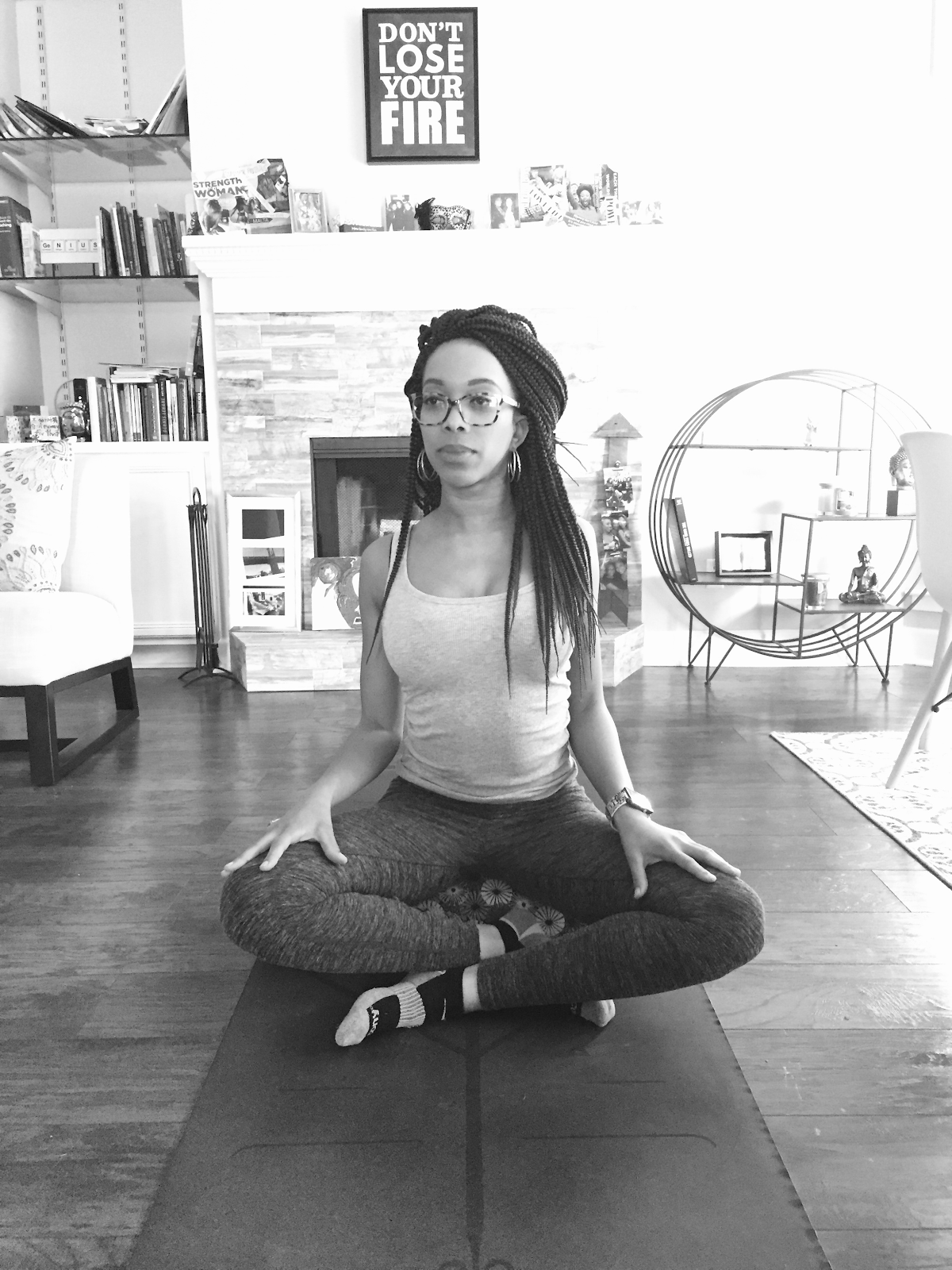
Grounding and feeling rooted helps us get in touch with feelings of stability and support. To practice, begin in a comfortable seated pose, with eyes either closed or open. Begin to center your mind with your breath; breathing deeply. Bring awareness to your sit bones and your connection with the earth beneath you. Observe how firm and supportive it is as you connect to it. Take several breaths in and out as you feel this connection deepening and begin to feel support and stability.
3. Counting Breath Practice
Focusing on our breath and breath practices can be a powerful way in which we can turn away from fear and move towards peace. To do this practice, begin in a comfortable seated position. Start off easily with a slow three-count inhale in and a slow three-count exhale out. Then, take a deep breath in for a count of three and hold for a second. After the hold, exhale slowly for a count of three. You can do this for up to a minute, and even extend the count for up to five seconds (five seconds inhaling and five seconds exhaling out, slowly).
4. Standing Grounding Meditation
In times of stress, this simple grounding meditation can allow us to come back to the present moment. To practice, begin standing tall in Mountain (Tadasana) with your legs hip distance apart. Bring awareness to your feet rooting down into the Earth and feel supportive energy rising up from the Earth into your bodies. Engage your core and your leg muscles and feel this energy rising up all the way to the crown of your head. Bring your hands to prayer position at your chest, take several deep breaths, and take a quiet moment to express gratitude and respect to our home, Earth.
5. Calming Peace Prayer Practice
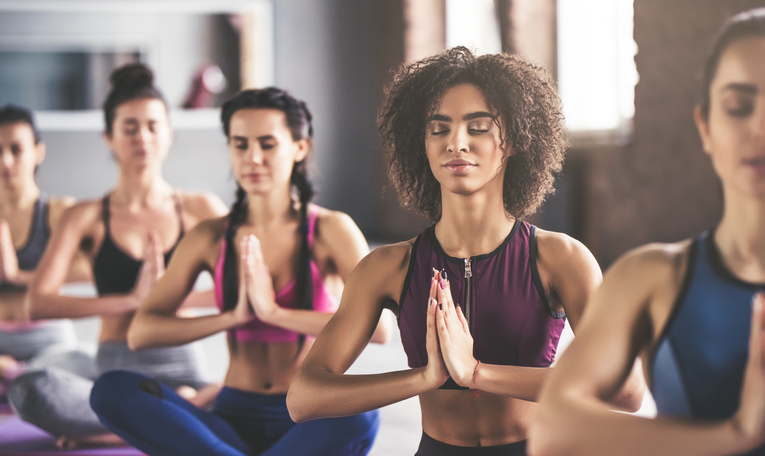
Compassion has a powerful effect on our minds and how we feel. Practicing compassion can take us from feelings of fear to feelings of love and understanding. To practice, begin in Easy pose or a comfortable seated position with your spine upright. Bring your hands to Namaste or Anjali mudra at your heart center. Allow your heart center to open and fill with love and light. Repeat the following peace prayer mantra, either out loud or internally. Imagine that you are directing this mantra to the entire world:
Lokah samastah sukhino bhavantu
This ancient Sanskrit mantra translates to, “may all beings everywhere be happy and free.” Repeat this up to ten times and feel your heart radiating with love and peace for all beings in the world.
Stress is experienced by everyone; the very nature of our fast-paced lifestyles often triggers stress and anxiety which, understandably, can be challenging to cope with. That said, the use of essential oils is a very effective way to combat the overwhelming effects of stress in a natural way. Aromatherapy has been utilized since ancient times in order to encourage relaxation and tranquility in the midst of stress. There are various ways to use essential oils such as applying them directly to the skin, inhaling them from a bottle, diffusing them in water or adding them to your hygiene products. Essential oils have a variety of purposes such as boosting energy, relieving headaches, helping with focus, improving sleep quality, and decreasing stress. Feel free to diffuse the following oils while practicing yoga or meditating in order to increase the relaxing effects of your practice. The essential oils listed below provide a natural remedy for stress and can be used to promote calmness and peace.
1. Jatamansi Oil
This calming and anxiety-relieving oil essential oil will especially benefit those who suffer from overthinking and it also supports deep, high quality sleep. Jatamansi is extracted from the spikenard root and it has a rich history of medicinal use in Ayurvedic medicine. It provides antioxidant and anti-inflammatory effects while also offering stress relieving properties. One way to use Jatamansi oil is by placing a few drops on the crown of your head at night to promote deep, restorative sleep. Otherwise, use it as a massage oil, add it to a bath or even a warm compress if a specific part of your body is tense.
2. Lavender Oil
This oil is the most commonly used essential oil for stress relief due to its relaxing effects on the mind and the body. Lavender oil is also a very effective way to deal with sleep-related problems as it serves as a sleep-aid while enhancing the quality of your sleep. Often used in aromatherapy, lavender oil has been shown to react the same way as anti-anxiety medications. This essential oil can be added to your bath or even added to an aromatherapy diffuser to promote a deep sense of relaxation and stress relief.
3. Chamomile Oil
Chamomile is an essential oil that relieves stress by reducing common symptoms of anxiety, promoting relaxation, reducing inflammation in the body, and regulating your mood. Chamomile extract is often used in tea to combat stress and improve sleep quality. It’s important to keep in mind that chamomile extract can be ingested but chamomile oil cannot. That said, chamomile essential oil can be used by adding it to an aromatherapy diffuser or to your favorite body lotion to help you feel at ease. Aside from its stress-relieving properties, chamomile also relieves pain, helps with anxiety and depression, aids digestion, and improves sleep quality.
4. Ylang-Ylang Oil
This fragrant essential oil derives from the flowers of Cananga Odorata Genuina which is a plant native to India but it can be found in other countries in Asia such as Malaysia, the Philippines, Indonesia, and also Australia. Ylang-ylang provides many benefits for the cardiovascular and immune system as well as lowers blood pressure and helps with depression. Additionally, this essential oil is known to relieve feelings of anxiety and stress due to its calming effects. Use this oil in your bath, diffuser or directly on your skin with a carrier oil such as jojoba oil. Bonus: this floral-scented oil can also be used as a natural perfume!
5. Valerian Oil
Valerian is an earthy essential oil that eases anxiety, stress and restlessness by promoting a sense of peace and tranquility. Its calming abilities might be attributed to its mild sedative effect on the body which also aids with sleep quality. The best way to utilize Valerian is by adding a few drops to an aromatherapy diffuser before bed and allowing its scent to guide you into a deep sleep.
6. Jasmine Oil
This sweet-scented oil has been used for hundreds of years in Asia to naturally treat depression, anxiety, and even sleep problems. Jasmine oil is an essential oil that is extracted from the white flowers of the jasmine plant and it is known for its sweet fragrance. Apart from its beautiful scent, jasmine oil is also used to effectively reduce anxiety and stress, exhaustion and depression. Jasmine oil will also boost your energy levels, improve your mood, and provide an overall sense of relaxation. Try adding this oil to an aromatherapy diffuser, a bath or applying directly to the skin.
7. Bergamot Oil
This cold-pressed essential oil has a sweet, floral scent and it has been used in Ayurvedic medicine for various purposes such as soothing irritated skin, ingested as a health tonic, and used as an antiseptic and analgesic. This essential oil is obtained from the peel of Citrus Bergamia, a fragrant citrus fruit. Bergamot oil can be added to a massage oil or body lotion, it can be added to an aromatherapy diffuser, and it can also applied directly to the skin. That being said, this oil is commonly used to effectivelyrelieve psychological stress and anxiety.
Common occurrences like arguments, traffic, financial struggles, deadlines, and responsibilities can all contribute to stress. Stress is experienced by everyone and when life gets overwhelming, it’s best to resort to a natural remedy for some relief. Aromatherapy is often used as a natural way to relieve feelings of stress without resorting to medication with inevitable side effects. Essential oils provide a sense of relaxation as well as better sleep quality which is needed after a long, stress-inducing day. Some essential oils are better than others at relieving stress such as Jatamansi, Lavender, Ylang-ylang, Jasmine, and others listed above. Be creative and embrace the various ways that these oils can be incorporated in your daily routine in order to keep you feeling calm, tranquil, and serene.
Stella Versteeg was exposed to yoga early in life from her father – traveling to India to practice yoga with her family. Living in ashrams and being surrounded by the beautiful and intricate Indian culture, from a young age, Stella was able appreciate and learn about the origin of yoga as well as meditation. Stella received her 200 HR yoga training from YogaRenew in 2018. She currently runs a blog, Ride Your Wave Yoga, which shares yoga tips, poses, nutrition, travel and mindfulness. Her goal is to spread honesty, love and awareness about a yogic lifestyle through her blog posts as well as create a supportive, inspired community. She aspires to share as much information as possible about the wonderful lifestyle that yoga has to offer and continuously evolve in her personal own practice.
Literally, sometimes it comes on like a wave. Completely unexpected. Uncalled for. And truly throws you into an internal and external fit of not knowing what to do. Have you ever had this feeling come on while watching the news about a particular crime? Or maybe while reading someone’s personal story about a trauma they’ve experienced? Or maybe you’ve had this unexpected feeling come on while in conversation with a colleague who holds limiting perceptions of particular groups of people, or even at lunch with your mother because she thinks you could be doing better.
And just maybe, you’ve had this feeling in a yoga class, right at the end when you’re being asked to close your eyes and take Savasana in a room of strangers.
Do you know what I’m talking about? It’s called being triggered. That wave of unexpected, unsettling, consuming rush of anxiety, panic, fight or flight is called being triggered. EVERY SINGLE ONE OF US HAS FELT TRIGGERED! And it’s okay and there is no shame in feeling triggered.
Here’s the thing about being triggered – we have conscious and unconscious understandings of what triggers us. I know from my personal experience, my mother’s way of genuinely expressing interest is to ask me a lot of questions and give me new things to think about in an effort to push me to new heights.
Although I am aware of how my mother expresses interest and support, in my mind, I hear her questioning nudges as, “I am not good enough. She knows I’m not good enough and is telling me so right now. And any successes I’ve had to date are meaningless because I need to be doing more.”
My mother without knowing unearths that wave of triggering emotions and one of two things happens: I shut down and push her away, or, I lash out at her and do my diligence to try to make her upset. Neither of these are good strategies for me or her.
The thing about feeling triggered is someone or something is able to unearth a feeling we haven’t quite dealt with or have made a choice to suppress. In my case, the feeling is insecurity and a sense of low worthiness or low value ascribed to my successes.
Now, I recognize having this conversation with my mother would be beneficial for both of us (and when she reads this, naturally a conversation will ensue). But, I have to stop and take care of myself first, before I can have an effective conversation with my mother or anyone who causes me to feel triggered (or to deal with an event that caused me to feel triggered – like being in a room of strangers with my eyes closed during Savasana).
So how do I that? Yoga! All of the yoga! Sure, going to a power yoga class will make me feel better. But, feelings of being triggered can linger on after I attend a class.
These triggering emotions are necessary, as Thich Nhat Hanh, spiritual leader and Buddhist monk, teaches us. He teaches us that these emotions arise and need to be treated with the same love, care, and affection as you would treat a baby. Once we learn to accept and treat our emotions with loving kindness, their power fades and an emotional healing process can begin. Remember – there is no personal growth without discomfort.
Here are four meditation and pranyama practices I do when I notice my triggers. Next time you feel yourself being triggered emotionally, you can easily do one of these practices in your office, your car, at home, or anywhere else you choose:
1. Loving Kindness & Self Love Meditation
Begin in a comfortable seated position (in a chair, on bar stool, on a bolster, wherever), with your eyes preferable open. Fix your gaze on something and place one hand on your heart and the other on your belly. Breathe in deeply through your nose and as you exhale, audibly let the air out of your mouth. Do this about five times. As you engage in this breathing exercise say to yourself the following mantra, “I am light. I am love. I am okay.”
2. Power In The Present Moment Meditation
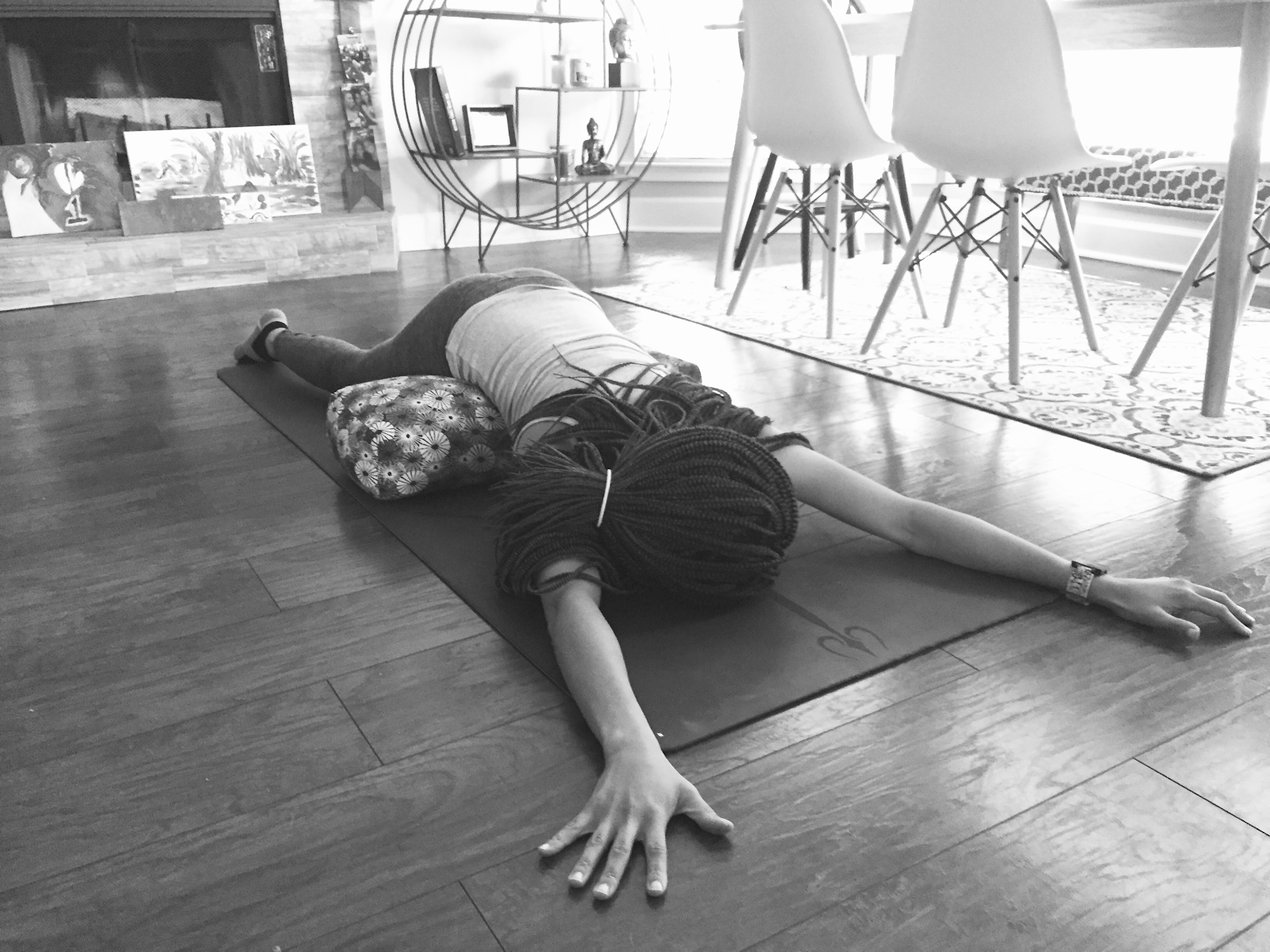
Begin lying on the floor face down and place a bolster or a thick pillow underneath you – right around your navel (solar plexus chakra). Next stretch your arms out overhead and take a V-position with your legs. You want to resemble a starfish on your stomach. Turn your head to one side (with eyes opened or closed), breathe in through your nose and hold for a slow count of four, and exhale out of your mouth for a slow count of four. While in this pose say to yourself the following mantra, “Today is today. Tomorrow is tomorrow. I am in control of my present.”
3. Acceptance Meditation
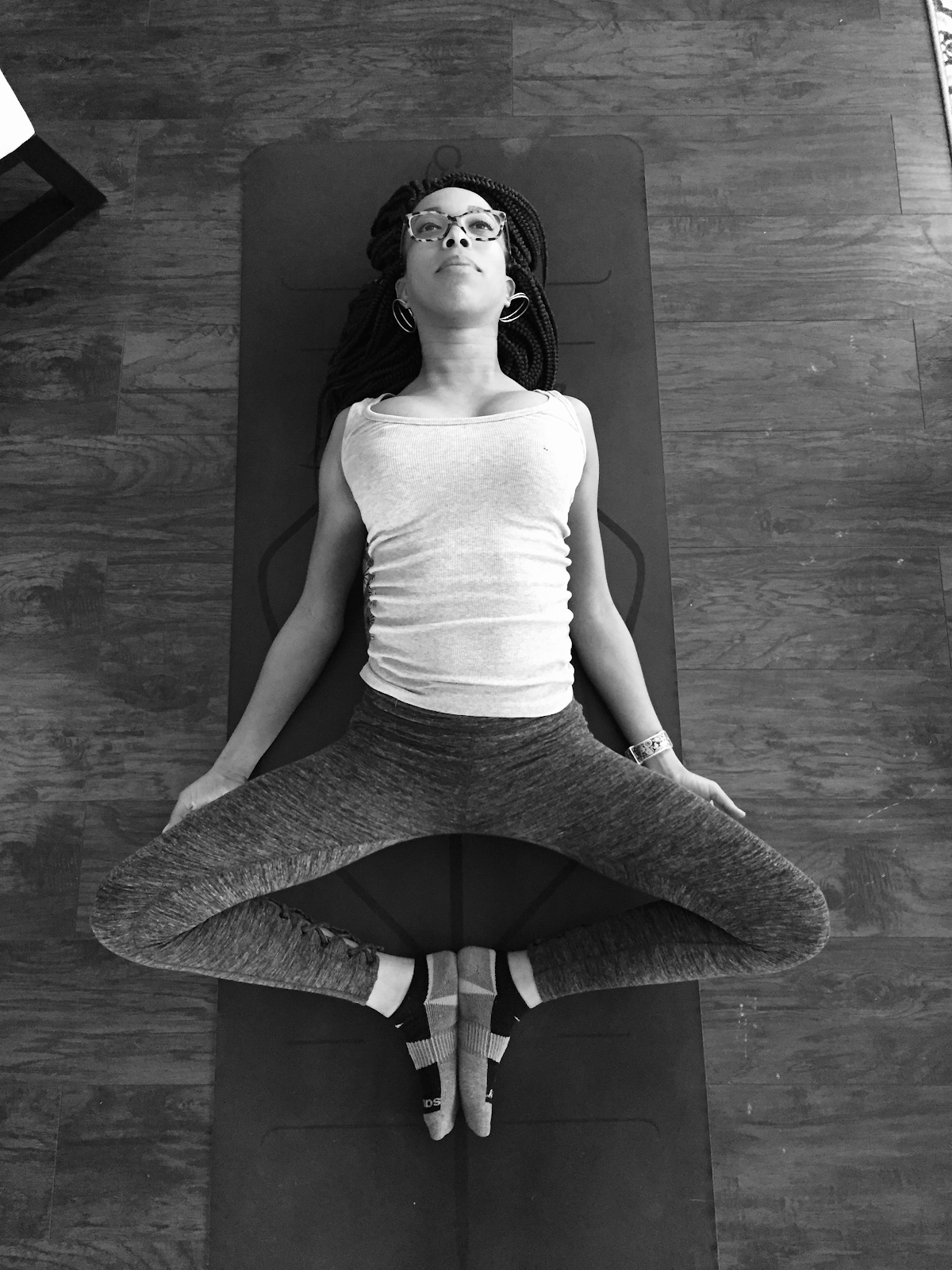
Take Supta Baddha Konasana or Reclining Bound Angle pose with a bolster or thick pillow right between your shoulder blades. Place your arms out to the side (If you are at work or somewhere you can take seat, take this pose by placing both hands behind you on your low back, puff your chest out, and lift your head towards the ceiling).
While in this position, choose a fixed point on the ceiling and see who or what it is that has triggered you. Next, speak into the silence, “I feel triggered because…Although, I feel triggered, my heart is open to my discomfort and I am okay.”
4. Inner Strength Meditation
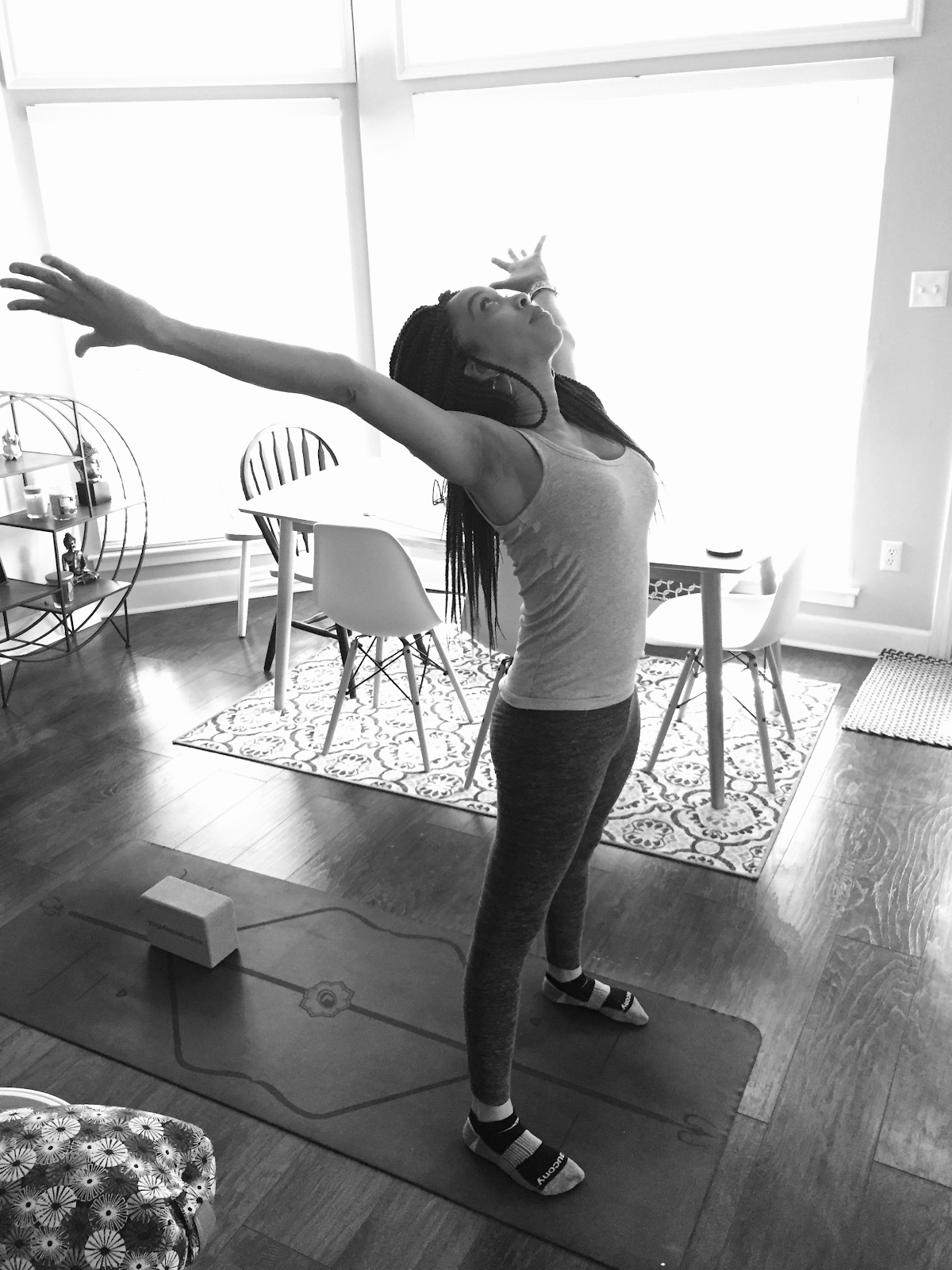
The last and final pose, I find to be helpful when I’m feeling triggered is taking a power stance. The pose is similar to Extended Mountain pose or Upward Salute pose, but instead you look like a vertical starfish. To do this, take your arms overhead, spread wide, and stand firmly grounded with your legs hip width apart. Take a slight backbend and allow your heart to shine towards the ceiling. Bring to mind what has just triggered you – take a deep inhale and audibly exhale. Say to yourself, “I felt triggered because…but, I am taking my power back. I am love. I am power.”
Treat what triggers you with love, patience, and understanding because you are okay and you are powerful!
Valin S. Jordan Ed.D. is an Assistant Professor of Diversity Education at University of Louisiana at Lafayette. Dr. Jordan’s work focuses on teacher identity and narrative as having particular implication for classroom practice. Dr. Jordan engages in contemplative pedagogy through the practice of yoga, she has founded an organization called, Yoga4SocialJustice. The organization is committed to mind and body connection through engagements of social justice and equity principles. More information can be found on Instagram @yoga4socialjustice or on the website https://www.yoga4socialjustice.org/.
Finding joy and having a more positive outlook on life is something we all strive towards in our lives. Unfortunately due to life stresses, an ever increasing to do list, and a fast moving society this is difficult to achieve for many. Joy and happiness are traits that are essentially a choice we can make each day. By making the personal choice to choose joy each day, we can take back our own power and ultimately choose the direction of our lives. If we want to have more joy in our lives, we have to be intentional to create this. True lasting joy will never come from outside circumstances or factors but from within.
Here are 7 small steps that you can do to cultivate joy in your daily life starting today.
1. Cultivate Gratitude
Having an attitude of gratitude is the number one thing you can do each day to live a more positive lifestyle. Each day, when you wake up or before you go to bed, make a list of things that you are grateful for and think of why you are grateful for those things. Think about those things as you go about your day. Gratitude allows us to put our life into perspective and create a richer life experience for ourselves.
2. Stop Comparing Yourself To Others
In a world where social media is a big part of our daily lives, it can be easy to fall into the trap of comparing ourselves to others. By doing so, we take away our personal power and find ourselves wishing we had something that another person has. What we need to keep in mind is that what other people portray to the world, doesn’t include any of the suffering or challenges that person may be facing. Challenges and suffering is universal and a normal part of our human experience – none of us can escape it. Let go of any notions you have of what you think you need to be. Strive to only be the kind of person that you would be proud of, regardless of anyone else’s opinion. By doing so, you will find complete and utter freedom in your life.
3. Surround Yourself With Positive People
The old saying goes that you become the 5 people you surround yourself with most each day. Be mindful of your friends and people you interact with daily. Positive people will uplift you and encourage you to be the best you can be. They will also support you and inspire you. Negative people on the other hand, may encourage you to stray away from your personal joy and create negative energy in your life. Take stock of any negative people like this in our life, and make the choice to surround yourself with positive people instead.
4. Do One Thing You Love Each Day
Everyday we may have a list of things that we need to do to accomplish our goals. Sometimes, when making that list, we can omit doing things that truly give us joy. Make a list of things you love to do – this could be something like practicing yoga, writing in a journal, going for a walk, or spending time with a pet. Each day, include one thing from your list of things that you love to do in your daily to do list.
5. Give Back To Others
Giving back from the heart is the greatest gift we can give to others and to ourselves. When we give, it uplifts us and heals our souls. In turn, it helps the other person receiving whatever we give. Find ways to give back to others, whether its through volunteering or just helping a friend in need. Even if you don’t have money to give, just giving your time to others is enough to make a difference in someone else’s life.
6. Meditate Daily
Meditation is a vital part of living a more joyful and positive life. It allows us to get in touch with our inner selves and remove any noise from our minds. It keeps our heads clear and enables us to gain clarity in our lives. It gives us focus to achieve our goals. Meditation also helps us to be more mindful over our thoughts. By meditating, we can be more aware of negative thoughts that we might have and make the choice to turn those negative thoughts into positive ones. Set aside time each day for yourself to sit in stillness anywhere from 5-15 minutes a day
7. Reframe Challenges & Obstacles
We will never be free of challenges or stress because this is a part of our experience as humans. Challenges and stress help us to grow so that we can become a higher version of ourselves. As the old saying goes: “a ship is safe in the harbor, but that’s not what ships were built for.” Our difficulties help us grow, teach us to strive for more, and help to eliminate the trap of complacency. Learn to reframe your challenges as an opportunity and instead of seeing how awful and hard it is – take time to reflect on how this situation is making you stronger and how you are growing from it.